Visiting Marek Kondrasiuk at his very own MarkArabians…
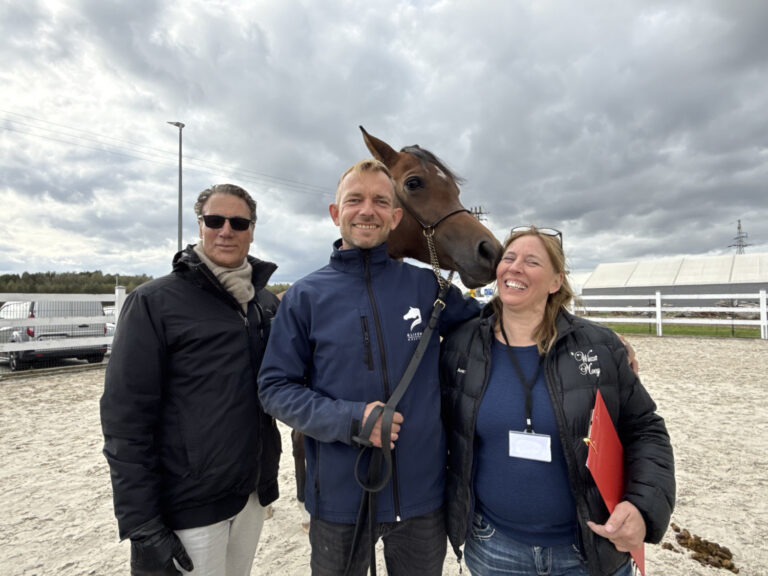
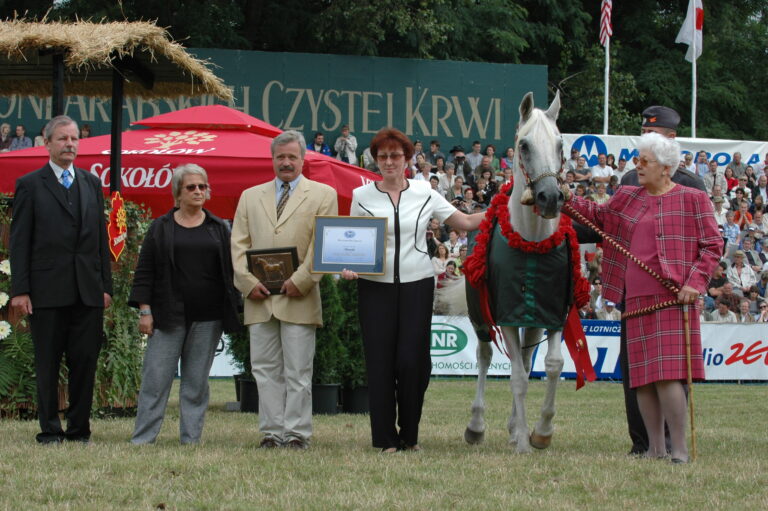
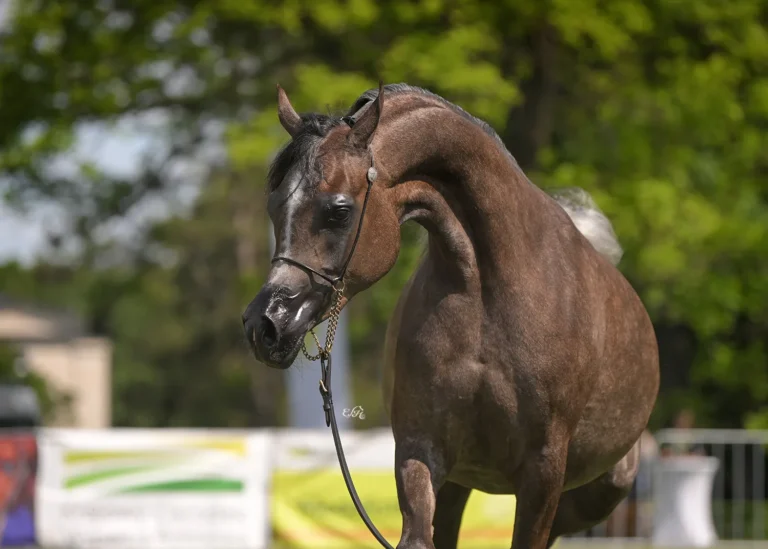
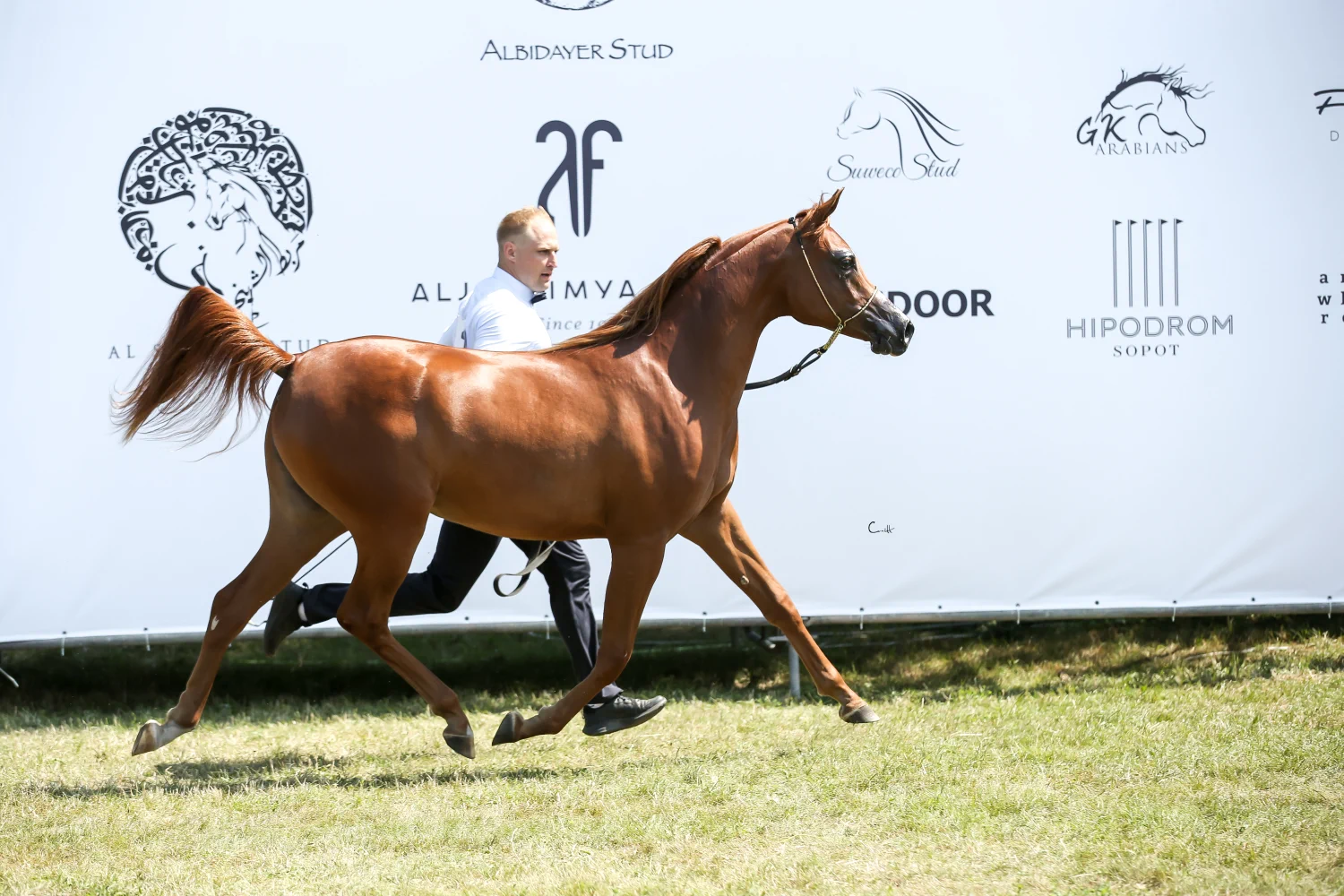
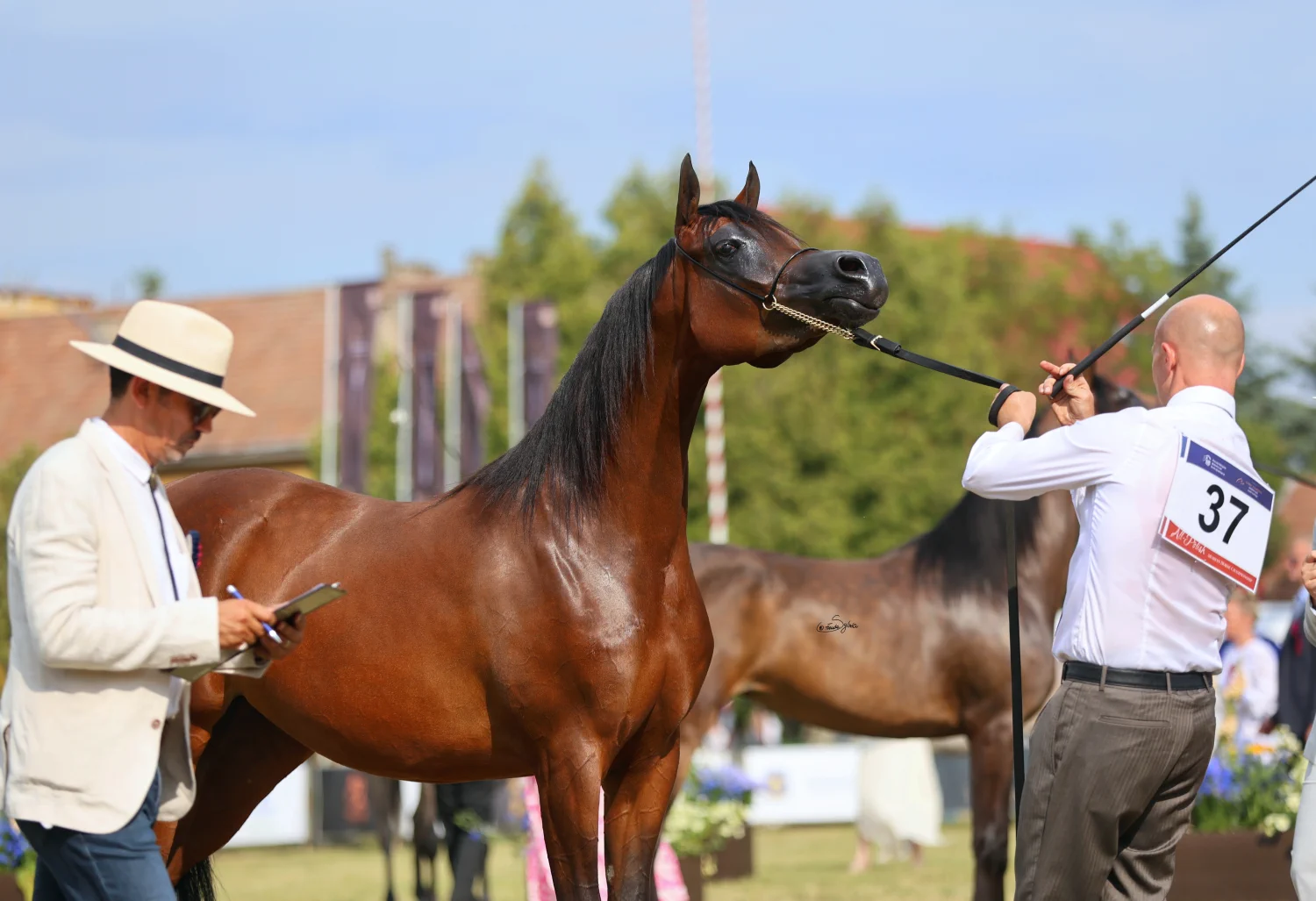
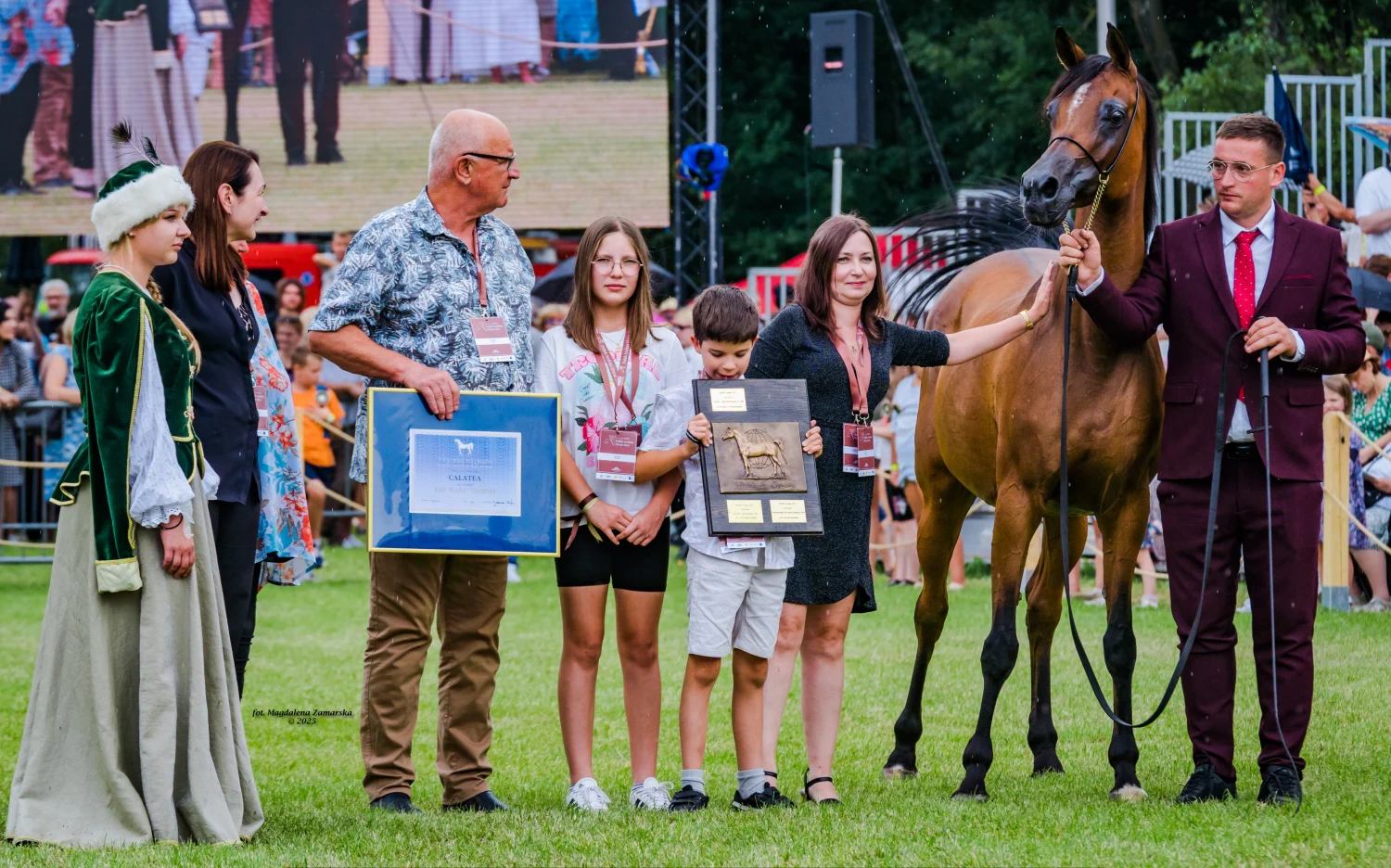
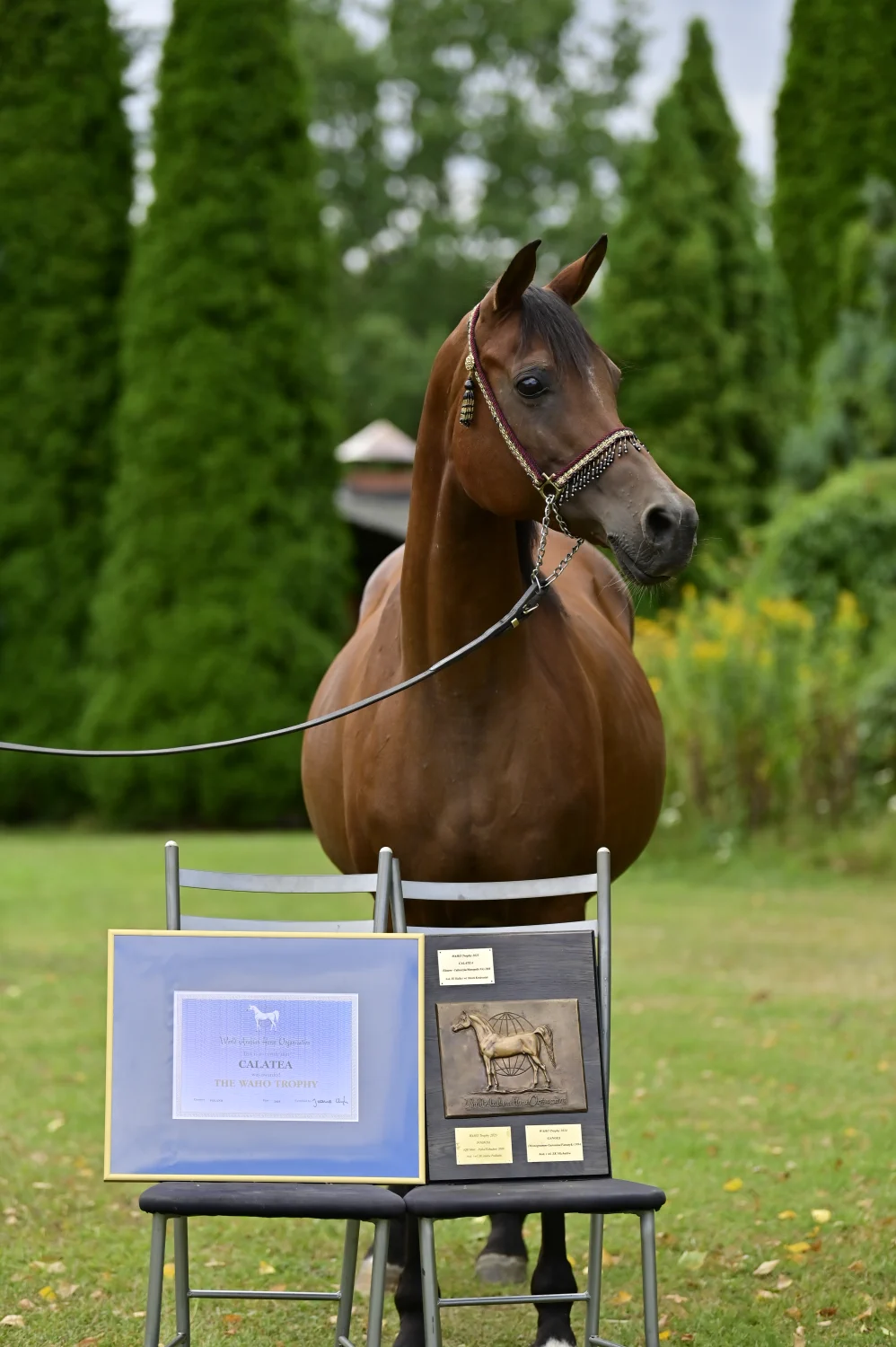
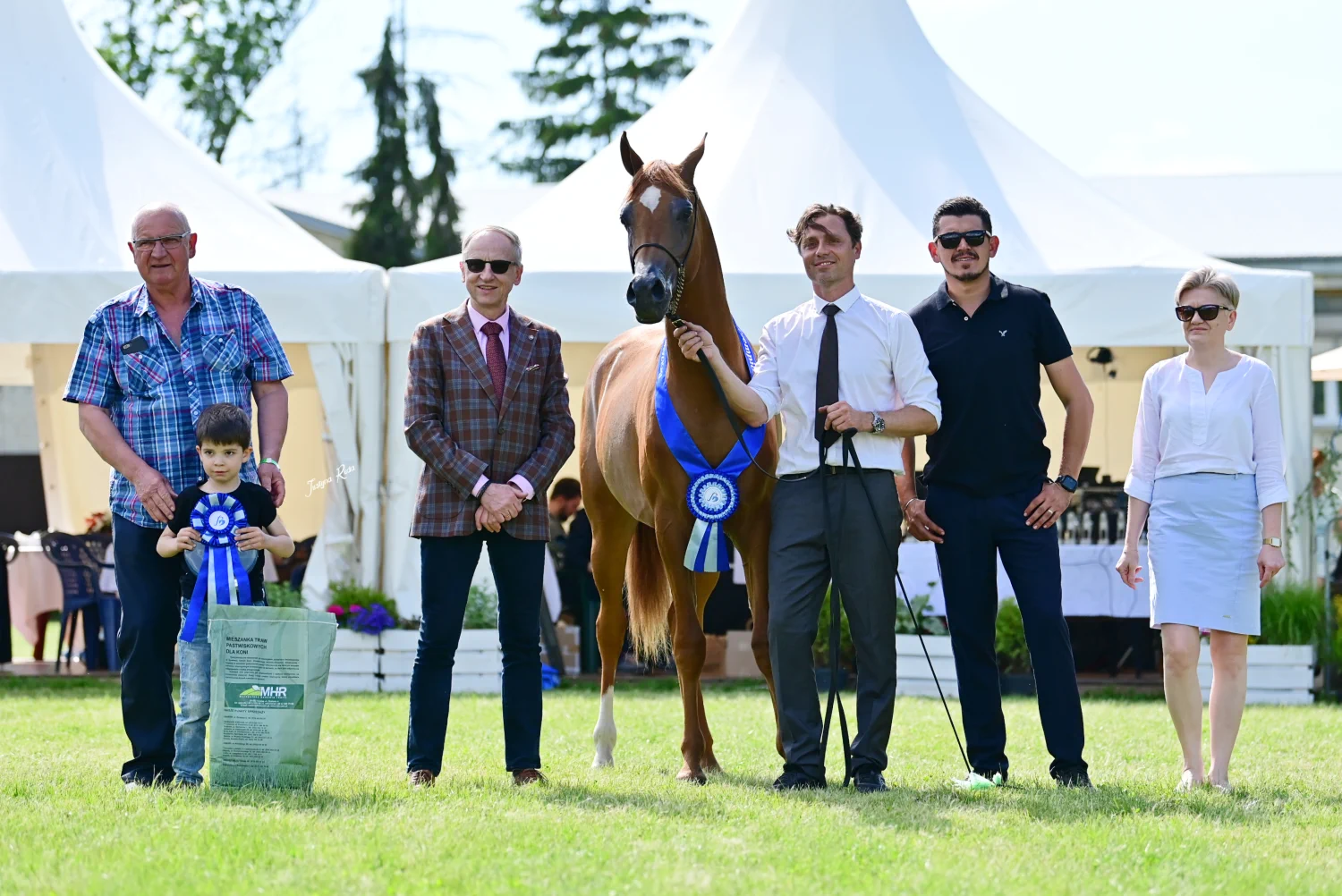
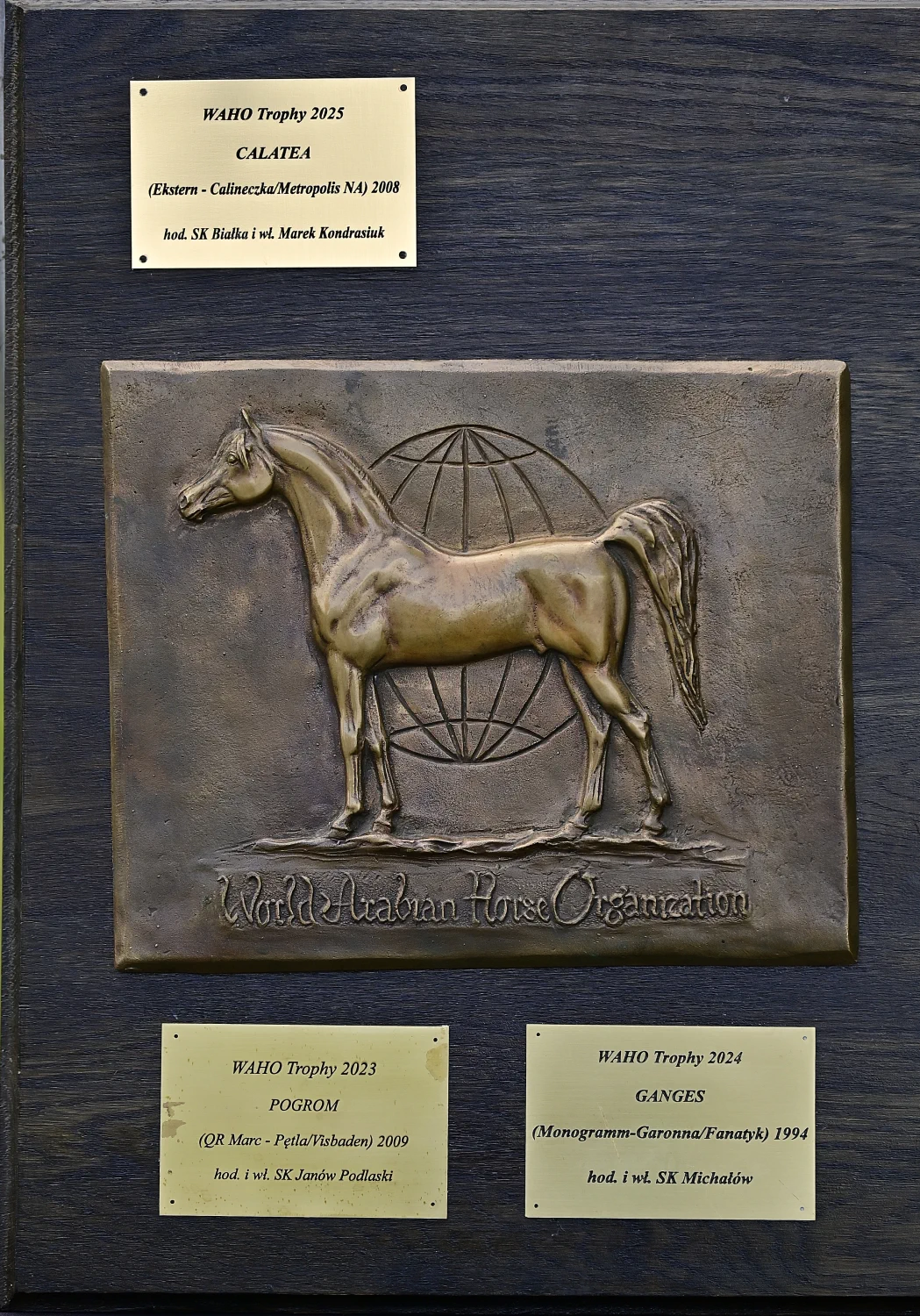
In my article about last year’s Polish Arabian Horse Days in Janów Podlaski, I wrote that Marek Kondrasiuk had three reasons to celebrate. First, Elamir Sahir, won the gold medal in the Yearling Colts Championship at the Emirates Arabian Horse Global Cup. Bred and owned by Łukasz Czech, that colt is out of the mare Escobaria and by the stallion Calatorio, both bred by Marek Kondrasiuk. Then, the bronze medal in the Junior Fillies Championship was awarded to the striking Cararra (D Zeidan – Calatina / Emerald J), owned by Alicja Najmowicz’s Nana Arabians. The culmination of this excitement came after the Polish National Arabian Horse Show when the mare Calatea (Ekstern – Calineczka / Metropolis NA) received the prestigious WAHO Trophy as an outstanding representative of the Arabian breed from Poland. It was then that I realised I ought to pay MarkArabians a visit – meet the owner far from the show ring or camera flashes. That’s how I ended up in Stanisławówka, a village right on the Polish-Ukrainian border, where Marek Kondrasiuk has been running his stud farm for over twenty years with the help of Justyna Reda who supports him in the day-to-day running of the farm.
You don’t just stumble upon MarkArabians by accident. Navigation proves unhelpful and at times even leads astray. A few kilometres before my destination, my phone lost reception, and the GPS simply refused to cooperate. This wasn’t surprising, however, as the hosts had warned me in advance that this would happen. To make sure I reached my destination safely, they gave me precise directions, without which my journey might have been virtually impossible.
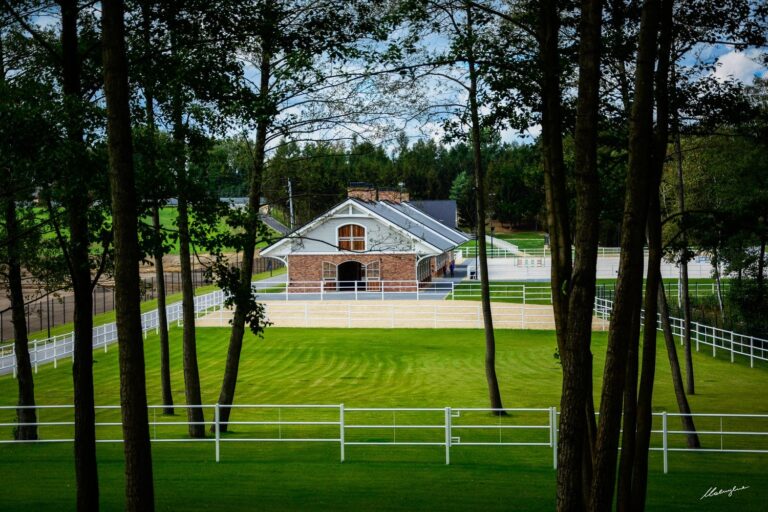
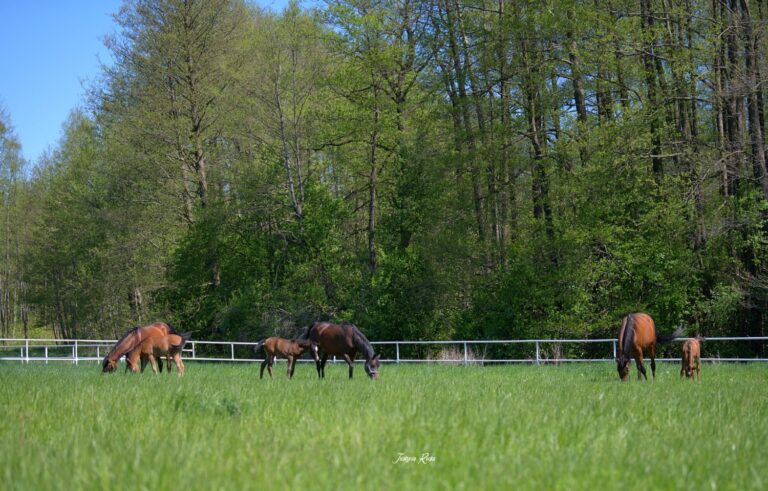
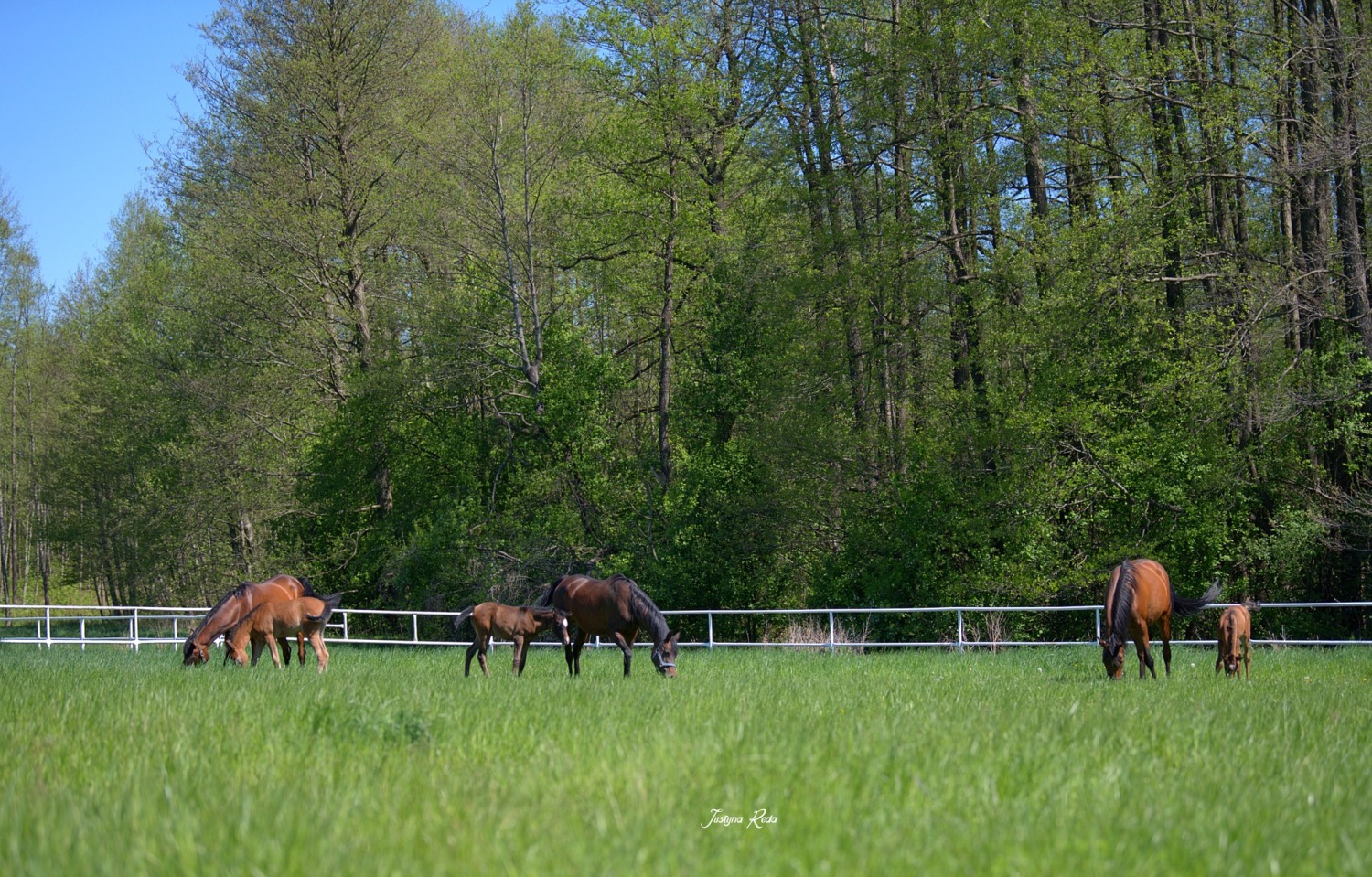
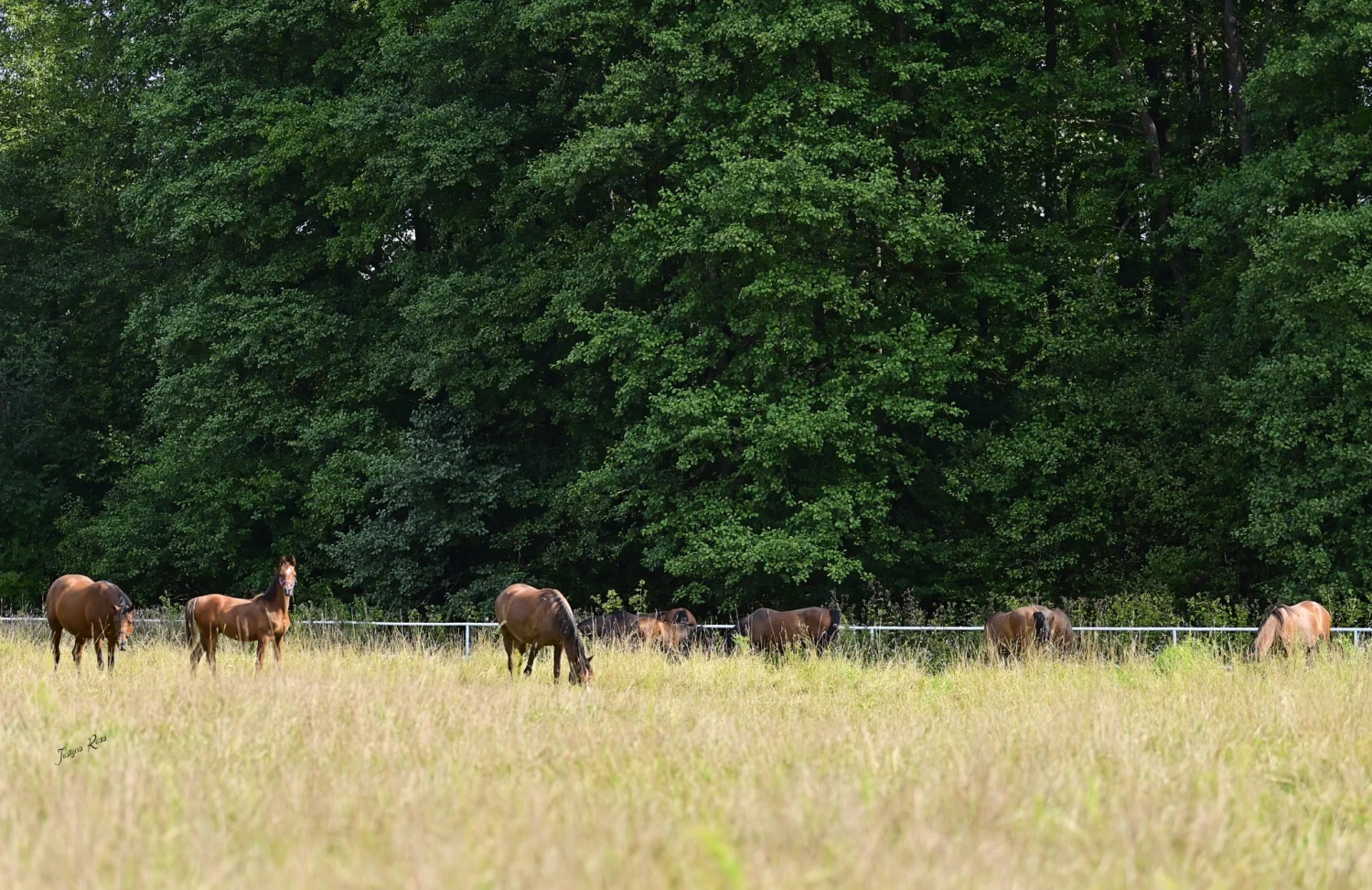
The farm is nestled among forests, meadows, and fields, far from the hustle and bustle of the city. We began our meeting with a visit to the stables and paddocks. As it usually happens when horse lovers meet, the conversation quickly turned to breeding, horses, hay quality, and the daily grind of life at a farm. Leaning against the paddock fence, we followed the horses with our eyes, and Justyna would tell me stories about each and every one of them – some were hilarious, others more serious – as she has been tending to them since their first days.
Finally, it was time for morning coffee. Even then, the horses remained the very centre of attention, as you can see paddocks and pastures from the house’s windows, and from one of them, you can actually peer inro the entire stable!
How did your story with horses begin? Is it a family tradition?
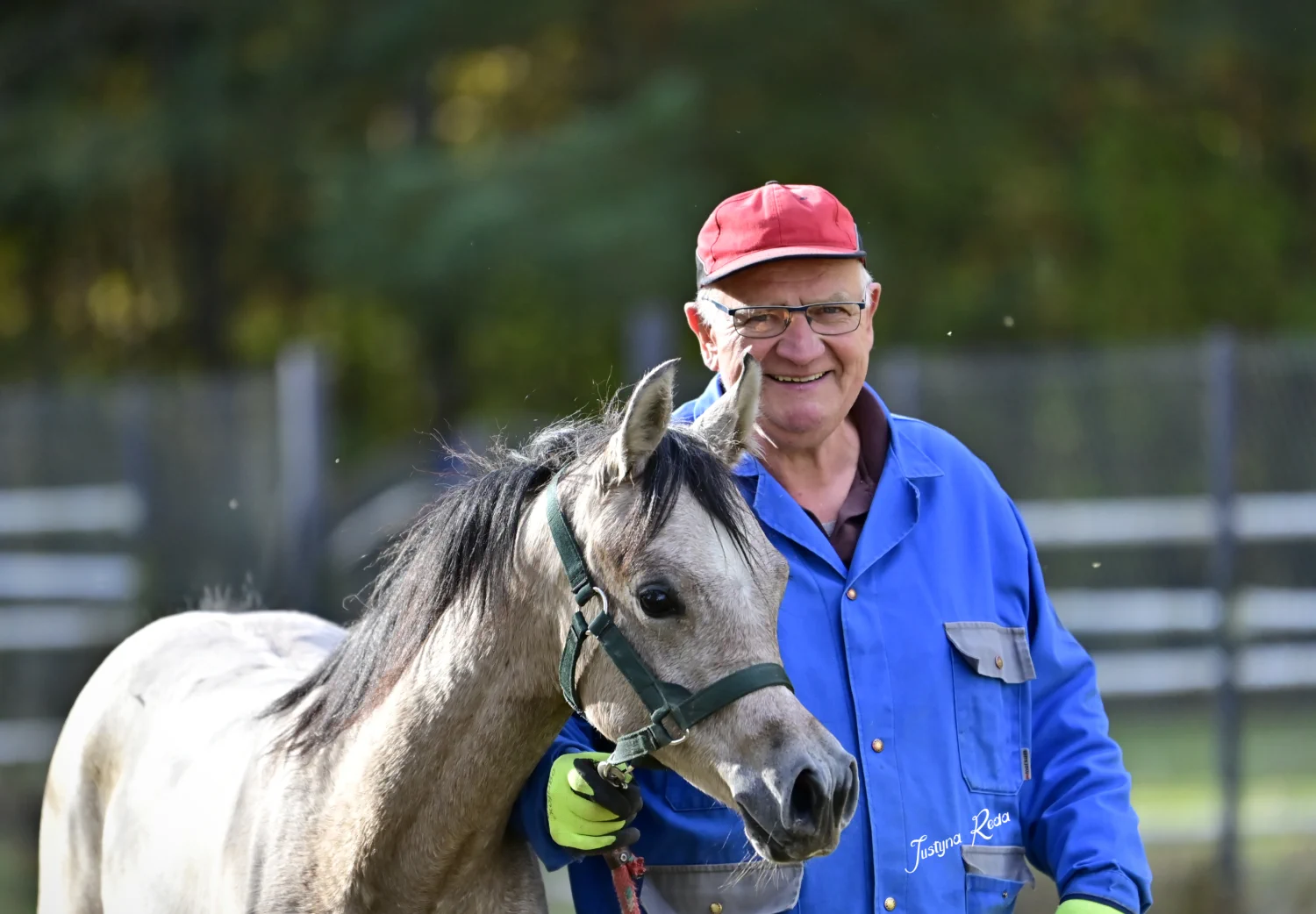
Absolutely not. I was a city boy, and horses came into my life somewhat by accident. A friend of mine years ago would take me to the horse market in Skaryszew[1]. Those were the olden days – 20, perhaps even 25 years ago. To get there on time, we’d have leave our homes in the middle of the night. I remember those night journeys and what we’d find when we got there: mud all over, horses everywhere, and us in rubber boots. We sold five horses, bought four – that’s how it all started. And I didn’t ride horses at all. Once, a friend saddled his horse, I mounted it and realised it wasn’t my cup of tea. Breeding was the thing for me from the start.
And why did you choose Arabians?
Marek falls silent for a moment. Why Arabians…? he repeats in a deep voice, and after a short while, with a supreme twinkle in his eye, he replies: “Because they’re beautiful! That movement, that head, that neck… All that makes up a divine picture. Only an Arabian horse can present itself in such a way. They are extraordinary!
Do you remember your first Arabian horse?
The first mare I bought was the bay Martyna (Europejczyk – Mitra / Celebes) from Michałów Stud. She’s a daughter of the stallion Europejczyk, out of the mare Mitra by Celebes, born in 1989. That was about 20 years ago. In 2006, Martyna gave me the bay filly Marusia by the stallion Wachlarz, Marek laughs. Well, yes, it was the time when ‘Czterej pancerni i pies’[2] was back on TV.
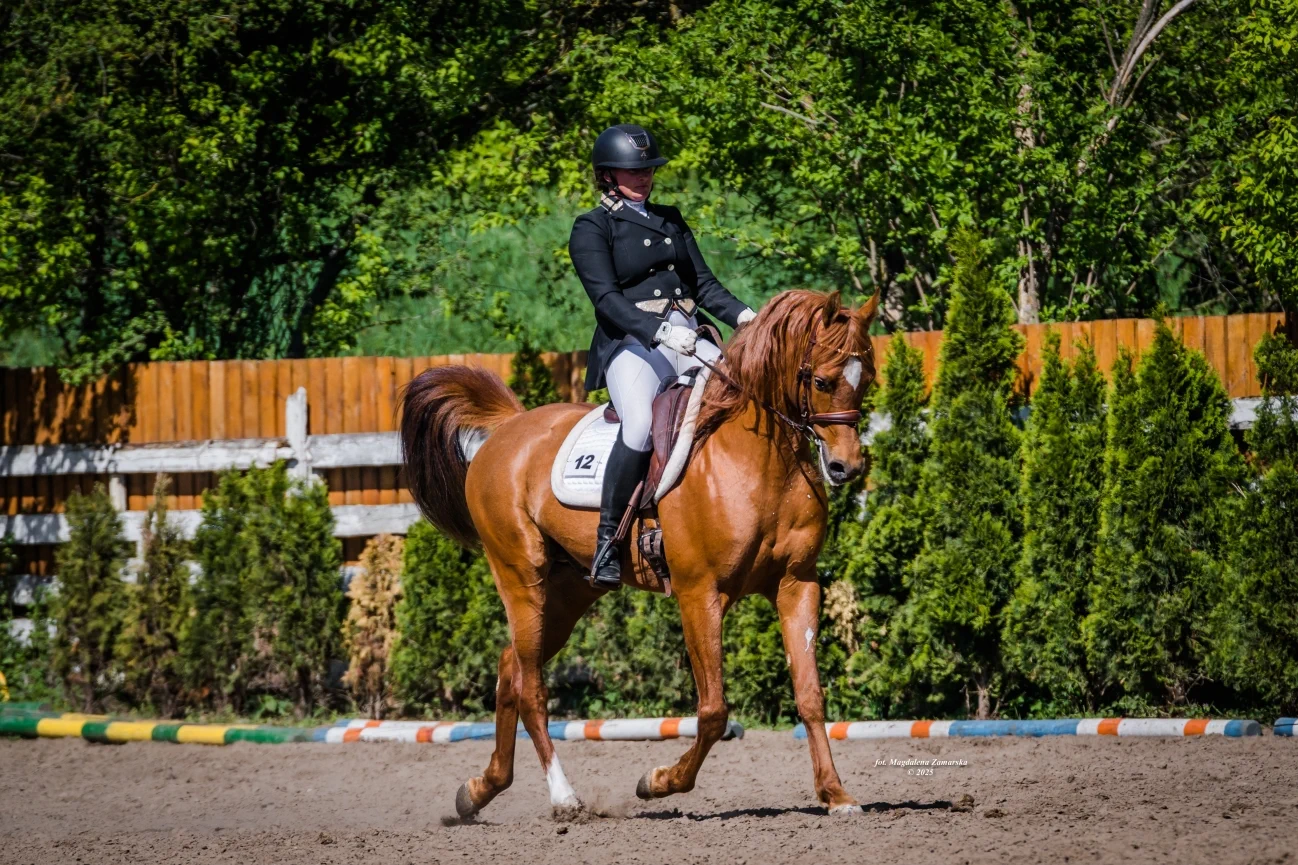
A year later, the grey Mandragora, daughter of the stallion Gaspar, was born. Unfortunately, Martyna died in labour, so I had to nurse and raise Mandragora myself. However, as often happens in situations where a human raises a foal, the horse may become unruly. And that’s precisely what happened with her. Without a mother to teach her the rules and to set boundaries, the young lady had her own unique ideas for fun. A few years later, Mandragora found her way to Renata Kowaluk, whose daughter, Magda, competed with her in Hunter and Classic Pleasure, Polish Historical Costume, and even dressage with considerable success. She was a truly wonderful mare.
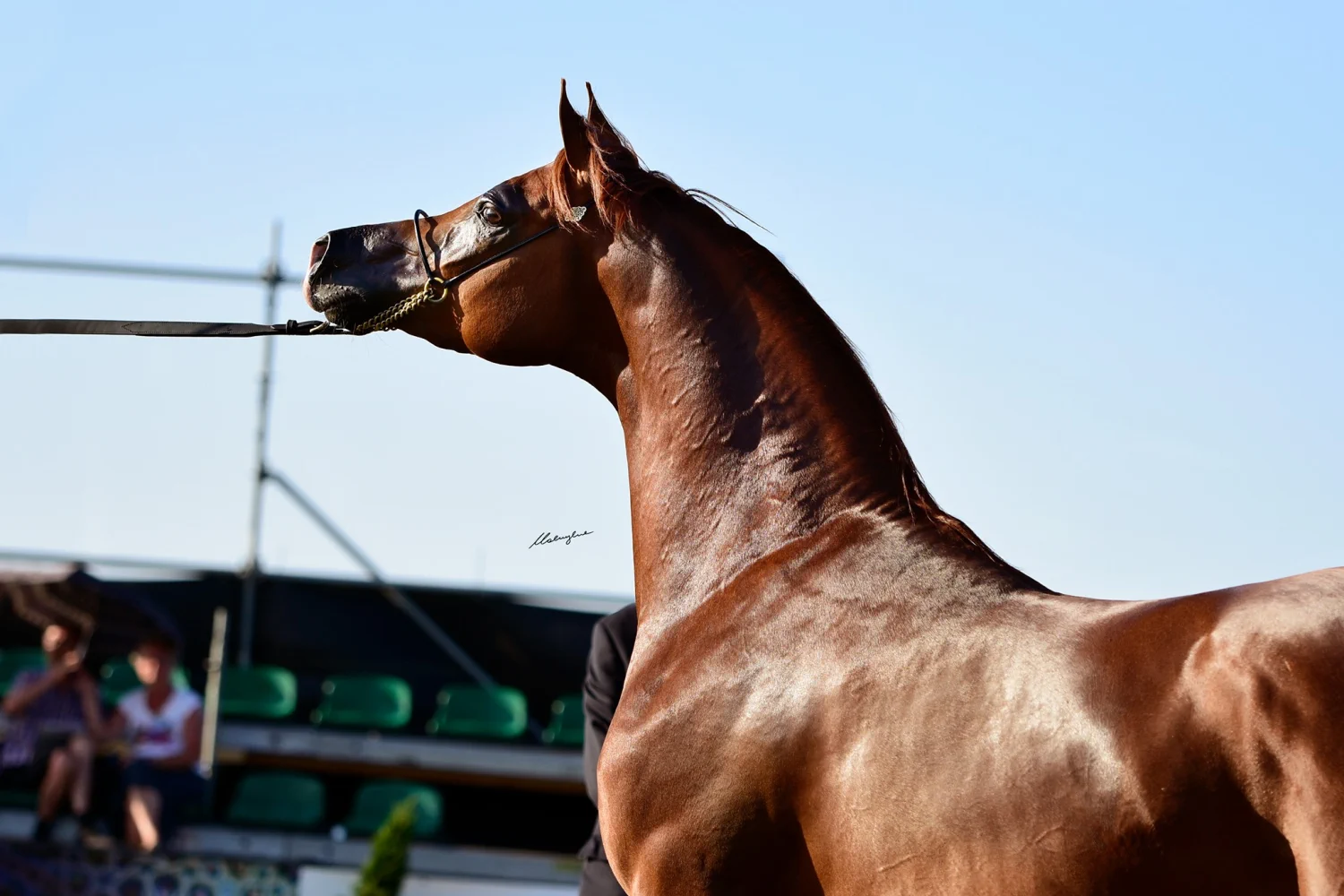
In 2008, I bought the bay Calatea from Białka Stud, and later her dam, the grey Calineczka. And that’s when it all began for real. In 2011, Calineczka gave me Clarissima, a chestnut filly by Esparto, who later went to the Emirati stud farm Al Jazeera Arabian Horse Stud near Abu Dhabi. There’s also a rather amusing story concerning Calineczka herself. A breeder from the Middle East bought her daughter by Piaff by the name Camilia, bred in Białka. The mare must have meant a lot to him, because he wanted to buy her dam as well. Thread to source, and with the help of a number of people, Calineczka was “discovered” at my place. This breeder was so adamant that he needed to buy her that I ultimately agreed to his request. Especially since Cezaria, her grey daughter by Ekstern, remained at the stud.
When you bought Calatea, did you suspect how much she would impact your life?
Of course! The instant I saw her, I knew she was the most perfect mare. I could feel it.
Which moments do you recall as the most beautiful in breeding?
I remember the moment when Calateon, a bay boy out of Calatea by Vitorio TO, first stepped out into the paddock. Goodness, how he swung his tail over his back! How he moved! Even then, he had a beautiful neck. His head could have been a little better, but the image of that three-day-old colt stepping outside for the first time in his life… as if it was yesterday. He was also a very bright horse. A few years later, at a show in Kraków, Shirley Watts spotted him and he immediately caught her eye. Calateon thus came to the Watts family at Halsdon Arabians. Unfortunately, after Charlie’s death, and then Shirley’s, this unique farm ceased to exist.
Once again, he falls silent, clearly reminiscing.
Shirley and Charlie were exceptional people. They don’t make that like that anymore… After a while, his voice still sentimental, clearly moved, his thoughts now in a completely different dimension, he adds: There’s no denying that one of the most beautiful moments in breeding is foaling, especially when it comes to fillies. Then the joy is doubled!
Would you then share with us the secret recipe for fillies?
Anyone who has had the pleasure of meeting Marek knows what to expect from him when asked a question like that.
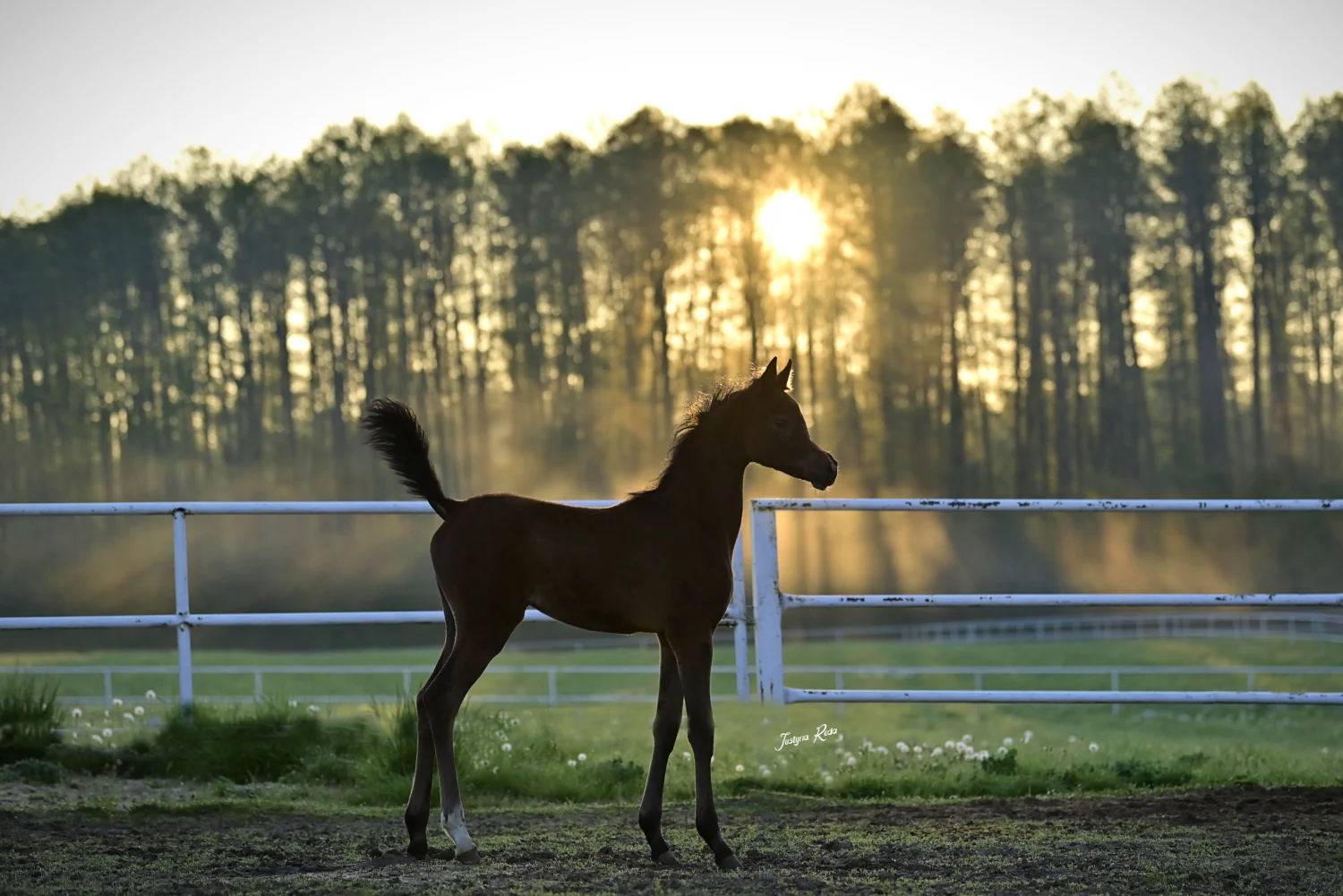
What secret recipe?! Throughout the entire pregnancy, Justyna strokes the mare’s belly whispering, “Give us a filly, will ya? Give us a filly!” And it works, because this year we’ve already had four! Breeders ask us how we manage to produce so many fillies… Why, it couldn’t be simpler and more obvious than that!
What does horse breeding teach and what does it contribute to everyday life?
It definitely teaches humility, patience, and how to cope with difficulty. It also brings a lot of adrenaline and variety to life.
Above all, being around horses is a daily joy, Justyna, who has been listening to the conversation, chimes in. And that’s what life is all about: joy. I love mornings in the stables when the horses greet me. I love looking out the window at the pastures and observing how the horses, which mare has something to “explain” to another, or who simply likes to spend time with each other. Such daily life is precious. Foaling also brings joyful emotions.
Well, it depends on what’s born… Marek laughs again. But we have good dams, so we have good foals.
So what do you think makes a good Arabian horse stand out?
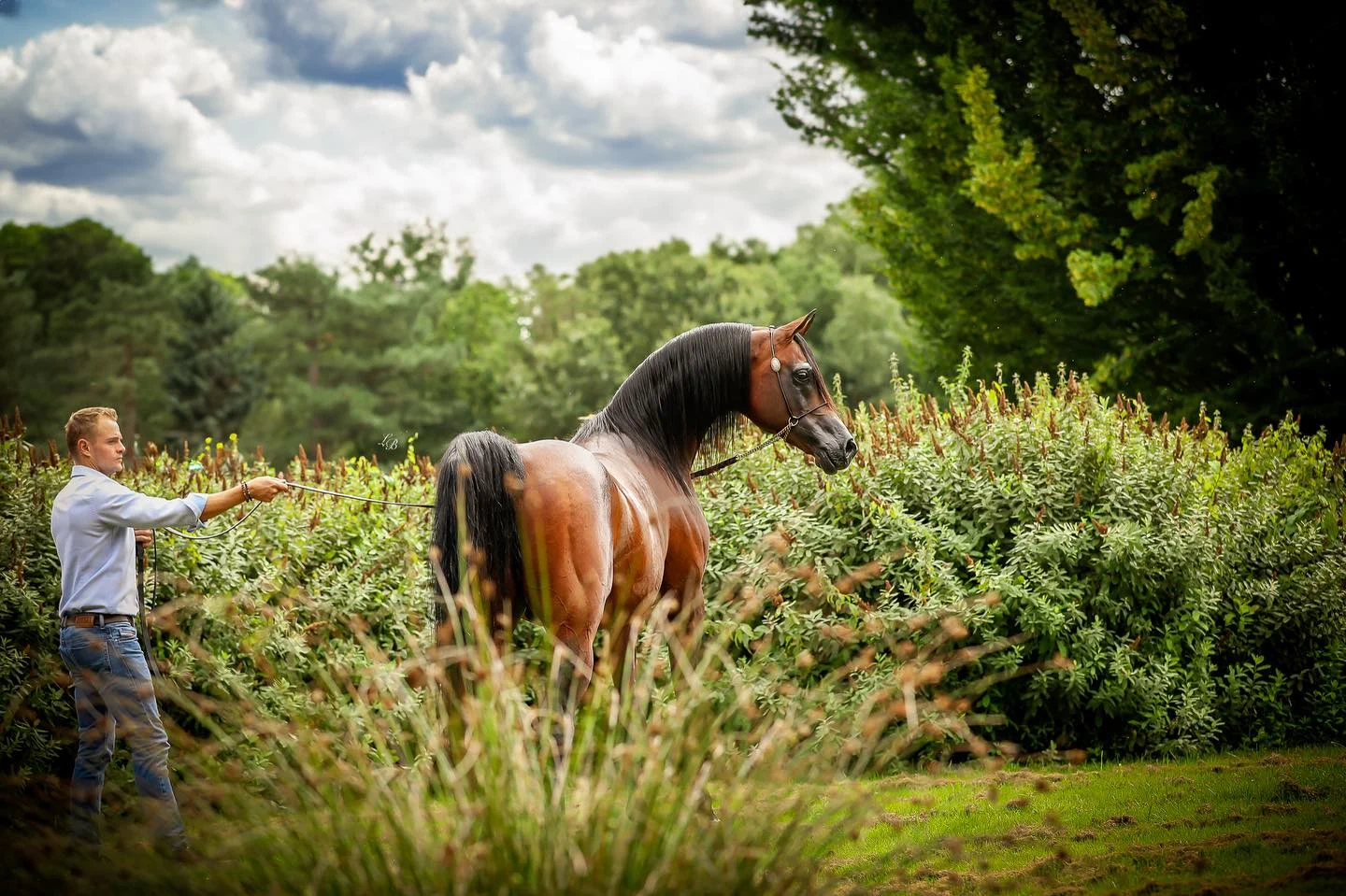
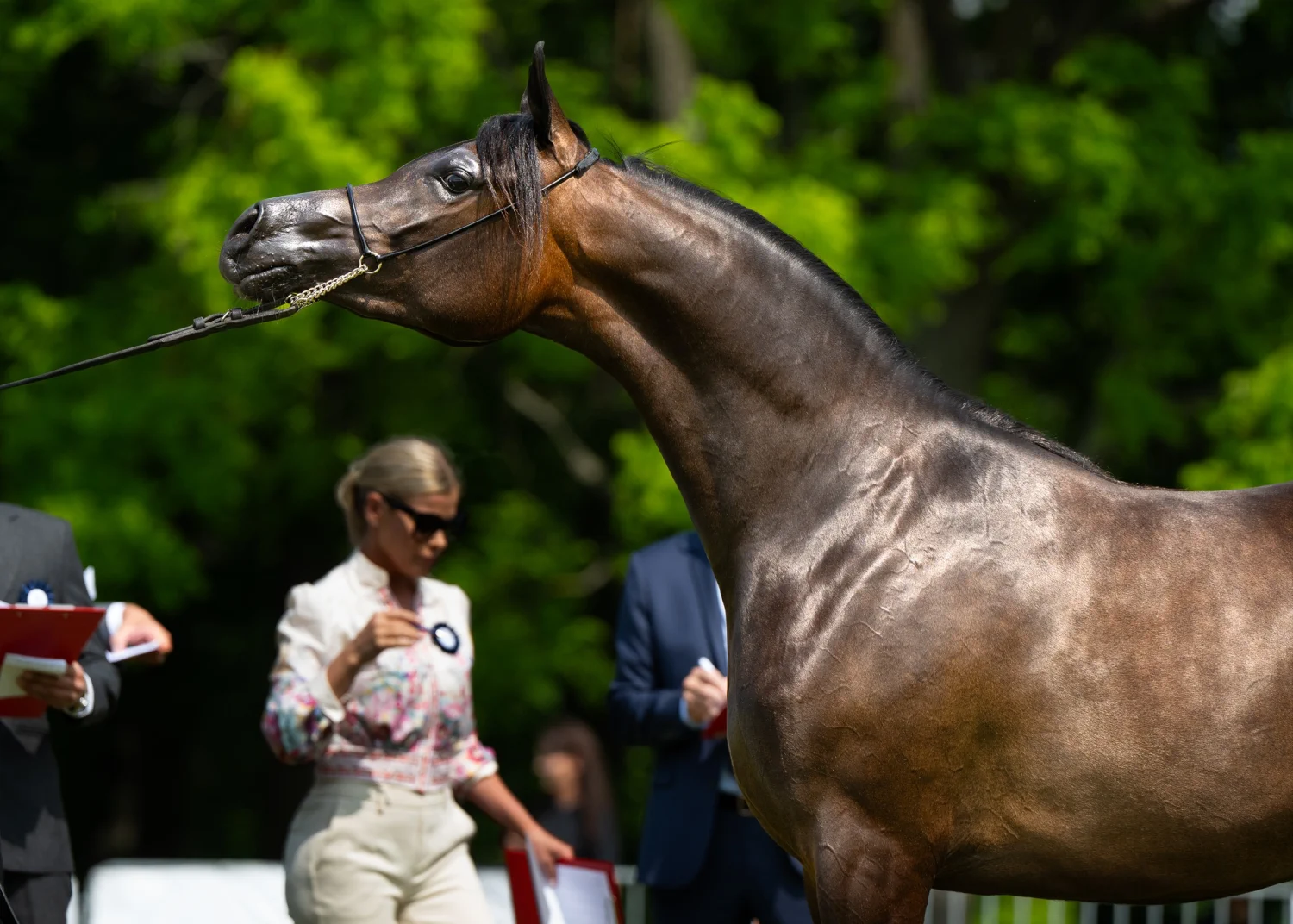
Above all, it must have good movement – that’s the foundation. Charisma is also essential, so that it can present itself well at a show, winning the hearts of both the judges and the audience. The head and neck are also important. If the horse is exceptionally beautiful, that’s great, but let’s be honest: that’s secondary. Movement is definitely paramount. Our horses undoubtedly have plenty excellent movement, Calatea for instance or her young bay granddaughter Caleana (D Zeidan – Calatina).
Caleana, when she throws her tail over her back and starts neighing – goosebumps! – Justyna interjects.
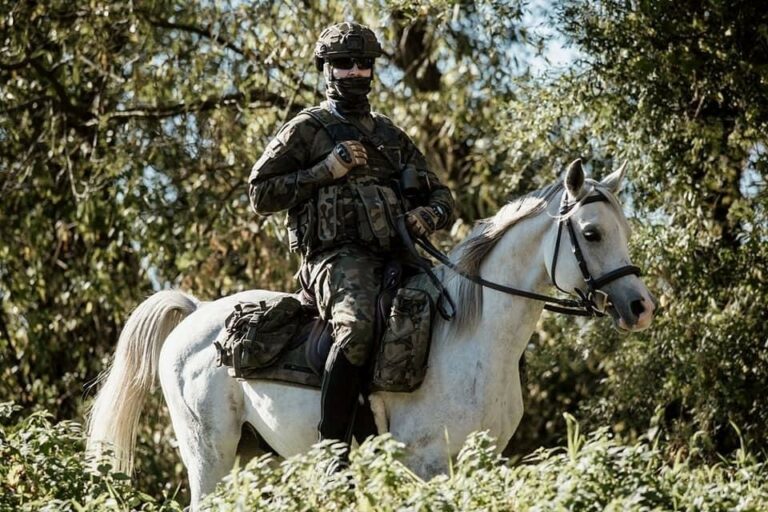
But let’s also keep in mind that a good Arabian horse isn’t just a show horse. A good purebred horse is also one that performs well under saddle. More and more people, though still too few, appreciate Arabians as riding horses. My friend, Grzegorz Miklaszewski, has nearly 50 Arabian horses that are ridden under saddle. Even my granddaughter attended a riding tour with him and she was delighted. Of course, such a horse is demanding as a mount, but with proper training and exercise, it performs exceptionally well under saddle.
Who shaped your “eye for breeding”?
My friend Henryk Wójtowicz, who passed away in 2018, was a breeder of Malopolski horses and the long-time president of the Lublin Horse Breeders Association and the Chełm Horse Breeders Club. He was a wonderful man whom I held dearly. Years ago, he was the one who dragged me to Skaryszew in the middle of the night.
How do you choose a stallion: intuition or calculation?
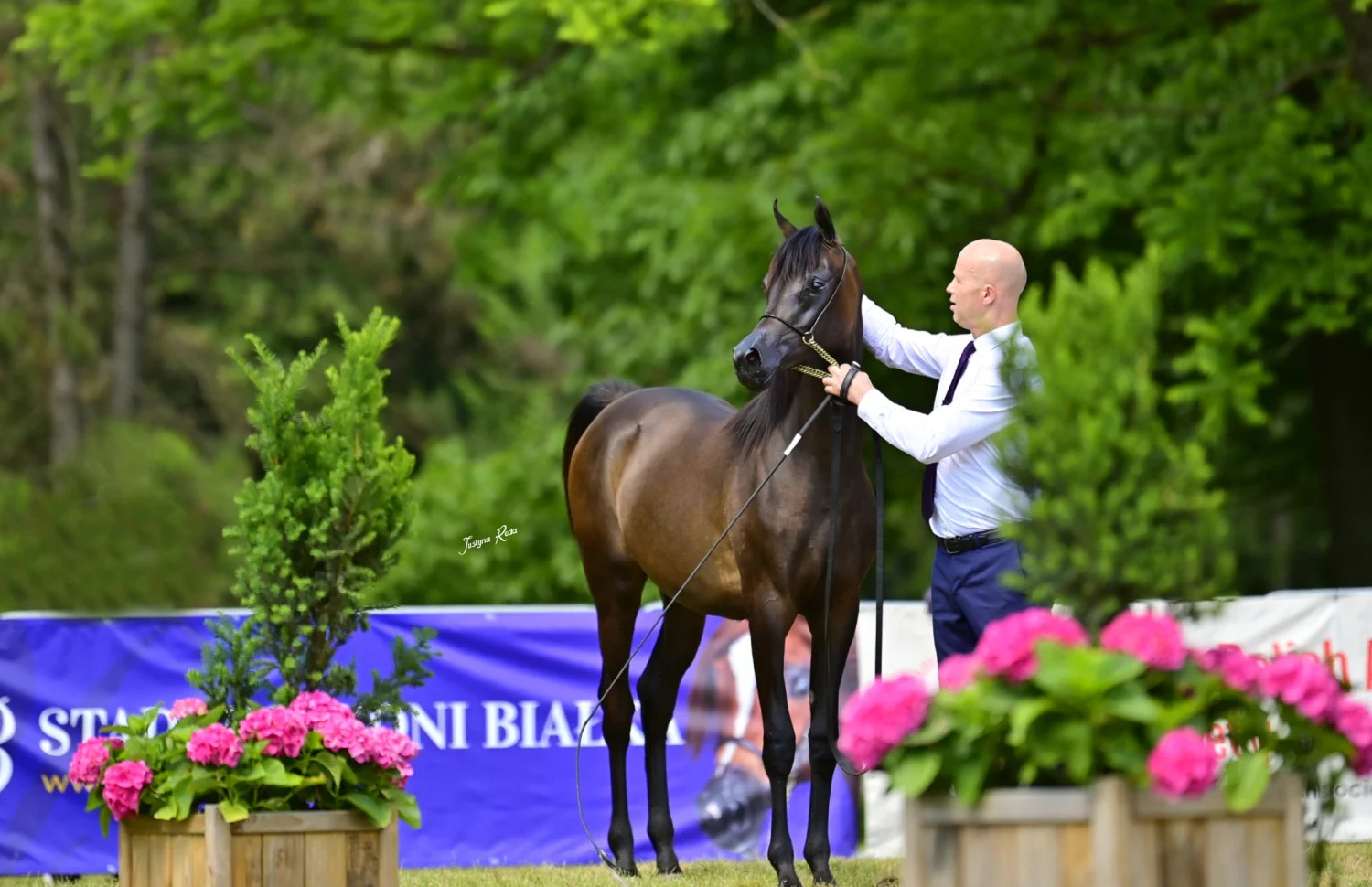
Intuition comes first as the most important, followed by a stroke of luck, because it’s essentially a bit of a lottery. Of course, one also needs money, because breeding using a terrific sire may cost sometimes cost you an arm and a leg. But that’s all trivial, as you can pay a lot, and still no one will give you even the slightest guarantee of success. We often choose lesser-known stallions – those only just entering breeding programmes. And then it turns out we hit the jackpot!
Exactly! adds Justyna. You need that proper gut instinct and a trained eye to see potential in a stallion that others haven’t yet discovered.
For example, we have very good horses sired by the stallion Ghaith Al Zobair (RFI Farid – Fazea Al Zobair / Marajj), Marek continues. What a head and neck he had! We also have horses sired by his son, the Polish-bred Nahil Al Khalediah out of Nawal Al Khalediah. We have a great colt by him, the spitting image Nahil. We also have excellent mares by the Spanish stallion Lyric E.A.
Do horses ever surprise you – they show great promise and then disappoint, or vice versa?
Caleana surprised us big time! Justyna replies without hesitation. When she was born, she was a beautiful filly, with a beautiful head and eyes. At two years old, she became a bit of an “ugly duckling”, only to become gorgeous again at three. Interestingly, we were convinced she was bay, but it turns out she’ll most likely be grey!
She’ll be greying for a long time… adds Marek. When she was born, we looked at her from every angle for any grey hairs, and we found none. And now, what a surprise! The mare Pilaryka (out of Pirana by Lyric E.A.) was also quite a surprise. When she was born, she was downright ugly. I even joked then: “Did they mix up the semen or something?” Marek bursts out with his characteristic heartfelt laugh. And now it turns out she’ll be a remarkably interesting mare. We’ll see how she performs at shows, but she might still once more surprise us. And speaking of surprises, we’re also counting on our yearling filly, Costa Brava (Lyric E.A. – Cherry Lady / Ghaith Al Zobair). We look at her and we feel that she’s bound to win.
What does the less visible side to the breeder’s work look like?
As I’ve said before, foaling is a beautiful time, but it can also be exceedingly difficult and challenging. It’s a cause for celebration if everything goes well during labour, but complications are never fully out of the question. It might happen that the breeder has to act on his own, improvising! Because the vet is unavailable or won’t make in time. Last year, I had to help a mare give birth. It was incredibly stressful, but fortunately, everything turned out well.
Foaling is stressful, particularly when we’re dealing with firstborns… adds Justyna. It’s a very emotional time. Fortunately, we haven’t had a young mare reject her foal, although sometimes you have to “put up a fight” with the little one to get him to take in the colostrum. Colts are a bit more difficult than fillies in this regard, but fortunately, it rarely happens. It’s worth having some milk replacer on hand, because you never know what might happen.”
Being a breeder, you really need a lot of skills and knowledge in a number of fields. Marek continues. I’m talking about both a solid foundation in veterinary medicine and horse nutrition, to name a few. Luckily, our horses never suffer from colic. We have well-balanced feeds, we add bran and linseed. I also always carefully check the hay to make sure it’s of decent quality and isn’t mouldy. We also make sure it’s not lying directly on sand. Veterinary preventative care is also crucial – everything has to be done on time; nothing must ever be neglected.
On top of that, our horses spend almost all day outdoors. Summer is an exception to this rule when horse flies and midges are rampant. Then we let them out at three in the morning and put them back in the stables around eight. In the evening, they can go out again. In these parts, that’s how you do it in the summer, because the insects are so plentiful. So breeders, as you see, have to be on their toes. And even then, we learn something new every day, because work at a stud farm is never-ending.
How has Arabian horse breeding changed since you began your adventure?
A lot has changed over the years. Breeding priorities have shifted, fashions are changing, and the entire market has evolved. The appearance of the Arabian horse, the standard of its beauty, is also different. When I started, the standards were completely different. Those who shape this market today have set new directions for breeding, and small private breeders like us have to adapt. It’s nothing to proud of if you breed a horse that you cannot sell. You have to maintain a breeding operation, often with significant investment. Of course, there’s a certain type of horses that I’d like to have, but one has to keep an eye on the market. A private breeder has to take that into account.
It’s very good that state stud farms are still operating, serving as a reservoir of a valuable gene pool that ensures the continuity of breeding. Because private breeders can exist, but they don’t have to, and then entire breeding programmes would disappear, their achievements lost forever. That’s why state studs play such a crucial role.
Unfortunately, many private stud farms are closing down. They’re shutting down their operations. There’s no point in deluding ourselves – it’s hard work. That’s why we celebrate every success of Polish-bred horses. We support them wholeheartedly and always keep our fingers crossed for them at shows, international ones in particular. Every single success of Polish horses brings us immense joy.
If you were starting to breed today, but with all the knowledge you have now, would you do anything differently?
In some cases, I would certainly have chosen mares for breeding differently. Apart from that, nothing.
What do you find most difficult about breeding? Is there such a thing at all?
The hardest decision is always to sell a horse. We become attached to them, and they become attached to us…
Is it true that everything in breeding is for sale and price is the only limit?
Over my dead body! Some horses I wouldn’t ever sell – no matter how much money they’d offer. I care for them greatly. Calatea is not for sale and never will be. She’s staying here; this is her home. Not everything is for sale. Sometimes I hear people say, “It’s an old horse, must be sold” to which I reply, “Out of the question, that’s not the way to go”. Because that indeed is not how it works.
What advice would you give to people who would like to start their adventure with Arabian horse breeding?
Any novice breeders should read a lot. They should compare pedigrees and devote considerable attention to shows – not only in Poland, but especially around the globe. It’s essential to stay up to date with the latest trends and innovations. The love for horses is, of course, fundamental, but it’s not enough – knowledge rules supreme.
I generally enjoy sharing my experience. I wish there were more breeders, because the larger our community, the better off we all are – the more empowered we are. When we sell our horses to young breeders, we stay in touch with them on a regular basis. We advise and aid them in making breeding decisions – we do this willingly, and we will continue to do so. If our horses go to new homes relatively close to us, we visit them and see how they grow and mature. This allows me to learn and draw conclusions myself, but I can also pass on my knowledge and experience.
When starting a breeding programme, choosing the right broodmare is key to success. The mare doesn’t have to be young, but she must have a good pedigree and be a good dam. And of course, you need quite a lot of luck.
What horse would make your breeding dreams come true?
There is silence, a moment of reflection, and then a subtle smile appears on Marek’s face.
My dream horse? Oh, I do have a vision of a horse with a stunning head and neck, and above all, with transcendent movement. I’ll say no more. I’m waiting for my very own European Champion, and maybe even World Champion. I think every one of us breeders has such a dream – it’s only natural. The question is, will I ever breed such a horse?
Of course you will! I believe in this dream… Justyna adds with a smile.
Here our interview slowly yet inevitably comes to an end. Horses graze peacefully outside, while inside the house, the conversation once again turns to breeding, plans, and future foals. Watching the horses strolling through the pastures, it’s hard not to imagine that this might be where the future European or perhaps even World Champion is to grow up.
I thank Marek and Justyna for their time, their hospitality, and the opportunity to explore the place where the history of MarkArabians has been forged for over twenty years. I wish them continued success, and above all, fulfilment of their breeding dreams.
[1] A historic horse market dating back to 1432.
[2] “Four Tank-Men and a Dog” was a Polish b&w TV series. Marusia was the love interest of the main protagonist.